 Shabtabnews In this dark night, I have lost my way – Arise from a corner, oh you the star of guidance.
alarabiya – Some intellectuals and commentators believe that the Iranian regime is waging a war on the Gulf states, but is not necessarily an enemy to Arab countries. They argue that Gulf countries want to drag Arab states into a needless hostility with the Iranian regime. The reality, however, is that Tehran is more of an enemy to Arabs than to the Gulf states themselves, and that its harm is greater to Arab capitals than to Gulf capitals.
There are two reasons for this:
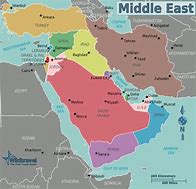
First: The Iranian regime has exploited the fragility of certain Arab states, infiltrated them, and effectively occupied them, something that has not occurred in the Gulf.
Second: Tehran has managed to weaken national identity, invest in sectarian identity, and create internal conflicts among the people of the same country. It has succeeded in this in Arab states and failed in Gulf states.
To further explain the first reason, it can be said that some Arab countries have been far more severely harmed by the Iranian regime, to an extent incomparable to what has happened in the Gulf. The damage caused by missiles and drones is temporary material damage that can be repaired. The war has shown that Gulf states possess advanced air defenses capable of protecting their territories, and they will undoubtedly emerge victorious from this war against a defeated and devastated Iranian regime.
Gulf states have remained resistant to Iranian infiltration, despite attempts to plant cells and carry out terrorist operations, and have remained resilient. The hostility of the Iranian regime toward Gulf states over decades has been a source of concern, but it has not crippled their economies or hijacked their political decision-making. In contrast, other Arab countries have suffered greatly from Iran.
Take Iraq as an example. Iraq is a country with the resources, intellect, and history to make it a successful state, but Iranian interventions have weakened it. After 2003, Tehran exploited the political and security vacuum and built a deep network of influence within the state. It created militias affiliated with it and influenced political decision-making. Iraqi national figures were forced either into silence or into exile in protest against Iranian dominance over their country.
In this case, Iran’s hostility toward Iraq appears more destructive compared to Gulf states that are capable of protecting themselves. The result is that Iraq is a country with vast wealth, but with constrained sovereignty, and its decision-making is not fully independent.
Lebanon is another example, where the country is experiencing widespread destruction due to the Iranian regime. Hezbollah has tied Lebanese decision-making to Iran’s regional project, and the result is clear: The paralysis of Lebanese state institutions, economic collapse, and international isolation.
Syria continues to suffer from the consequences of Iranian dominance. Elements of Iran’s Revolutionary Guard have intervened directly, and Syrian territory has been violated through the deployment of sectarian militias from multiple locations. Syrians have paid an enormous material and human cost as a result of this intervention.
Palestine and Yemen are other examples. Iran is more of an enemy to these countries than to the Gulf, which has protected its sovereignty and resources.
The second reason is investment in sectarian identity and the weakening of national identity. Tehran has weakened the sense of national belonging and strengthened sectarian loyalties. We have seen some citizens of Arab countries feel more loyalty to Ali Khamenei, Hassan Nasrallah, and Qassem Soleimani than to their own states.
Tehran has been able to build parallel systems within these countries, including schools, media, and social institutions, creating a state within a state and a society within a society. It has tied these communities to an ideological doctrine charged with slogans of sacrifice and martyrdom for its project. The result has been catastrophic, placing citizens of the same country in confrontation with one another.
This has not happened in Gulf states, which have fought extremists linked to the Iranian project and strengthened national identity. The strength of the state and economic development in the Gulf also prevent the emergence of cross-border loyalties.
When I say, “the Gulf,” I do not mean only citizens, but everyone who lives on its land, including Arabs, foreigners, and even Iranians. The Gulf, ultimately, is a civilizational concept not tied to a narrow identity, but rather a model based on strong state institutions, economic success, religious tolerance, social openness, and integration with the modern world. A world that accommodates everyone.
I am against chauvinistic divisions, but the irony is that these intellectuals and commentators practice them when they align with Iran. The clear reality before them is that the danger and hostility of the Iranian regime toward Arab countries is broader, more aggressive, and more dangerous than its hostility toward the Gulf states. So why, then, do they applaud it?