 Shabtabnews In this dark night, I have lost my way – Arise from a corner, oh you the star of guidance.
Iranwire – This report examines several key questions: What is the story behind the attacks on checkpoints? Why are these checkpoints militarily significant for Israel? And what effect could these attacks have on the Iranian people’s protest movement?
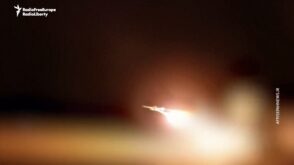
On March 12, the Israeli military confirmed that it had carried out drone strikes on Basij checkpoints in several neighborhoods across Tehran. Earlier, the IRGC-affiliated Fars News Agency had reported that ten Basij members were killed at various checkpoints across the capital.
Videos circulating online show scenes of panic during funeral processions for some of those killed in the war in Tehran. As the sound of drones is heard overhead, mourners can be seen running in different directions. In a recent statement, the Israeli military described these strikes on checkpoints as part of a phase aimed at “deepen the blow to the core layers and primary infrastructure” of the Islamic Republic.
What We Know About the Attacks on Checkpoints
Since the beginning of the “12-Day War,” citizens and citizen journalists have repeatedly reported the establishment of Basij checkpoints meant to intimidate the public.
IranWire has received reports from Rasht and Ahvaz describing how these forces interrogate and detain citizens on the streets. According to these reports, they force people to unlock their mobile phones, examine private messages and information, and in some cases fabricate security charges against them.
New reports reaching IranWire suggest that checkpoints have continued to appear with varying intensity since June 2025 in cities such as Tehran, Rasht, Karaj, Tabriz, and several locations in the provinces of Kurdistan and West Azerbaijan.
A resident of Tehran told IranWire that checkpoints became more frequent and more aggressive after the January protests. According to him, Basij members block roads with their vehicles, leaving only one lane open, while monitoring passengers with heavy weapons before allowing them to pass or ordering them to stop. He added that since the start of U.S. and Israeli strikes, their numbers have decreased and many have begun covering their faces.
Reports also indicate that two days after Israel began targeting checkpoints, a post in southern Tehran and two police stations along Freedom (Azadi) Street were struck. At the same time, an audio file first shared by the “Mamlakehte” channel appears to capture a commander or senior official speaking to these forces.
In the recording, he tells them not to be afraid and claims they are not the targets, saying Israeli drones are only gathering intelligence. He advises them to move into side alleys when they hear drones and return to their positions afterward.
However, official reports confirm that Basij personnel have been killed in these strikes. The Israeli military has also previously stated: “Anyone serving the Islamic Republic is a threat to the Iranian people and is our target.”
Several social media posts claim that Basij forces at these checkpoints have been forced to hide under bridges. Many law enforcement officers are now traveling in civilian clothing and using private vehicles, while police stations have largely been emptied. There are also reports that some equipment used for repression has been moved to schools and mosques.
On the night of Friday, March 13, a video appeared online showing a checkpoint established inside a tunnel on the Hamedani (Hakim) Expressway. Other videos show government forces and their families walking in small groups through backstreets at night while chanting religious slogans such as “Heidar, Heidar.”
Reactions to the Attacks on Checkpoints
Although internet access in Iran has been almost completely shut down since the war began on February 28, some citizens have still managed to communicate with the outside world.
On social media, many users have recalled the case of Kian Pirfalak, the ten year old boy from Izeh who was shot and killed in his family’s car at a checkpoint in November 2022.
Clips from an interview with Mahmonir Molaei-Rad, Kian’s mother, have been widely shared again. Many users expressed satisfaction at seeing the regime’s repressive forces “paying the price” at the same checkpoints they once used to control citizens. Others shared stories about humiliating experiences during car searches or phone inspections carried out by Basij and IRGC members.
Some reports also describe the displacement of these forces. According to accounts reaching IranWire, because many headquarters have been destroyed or threatened, these forces are now scattered throughout the streets, with IRGC pickup trucks delivering food and blankets to them.
One striking development is that citizens are openly reporting the locations of these forces. Despite the risks, people continue to use Telegram channels and social media messages to warn others and possibly inform attackers about where these forces are stationed, apparently aiming to weaken the regime’s ability to suppress dissent.
Public Support for the Attacker: What Makes the Iran War Different
Farzin Nadimi, a senior fellow for defense and security affairs at the Washington Institute, told IranWire that the alignment of a large portion of the Iranian population with the Israeli and U.S. governments makes this conflict different from other modern urban wars, such as the war in Gaza.
According to Nadimi, attacks on security forces, special units, and Basij members on the streets “usually serve a reconnaissance and monitoring purpose.” Israel and the United States are trying to observe the behavior of these forces constantly. If they are not present at checkpoints, they are likely located somewhere else.
“At this stage of the war, many main headquarters and bases have been destroyed, and forces have naturally scattered,” Nadimi said. “Israel’s stated policy is to prepare the conditions for the people to take to the streets and take control. While that hasn’t happened yet, putting pressure on checkpoints which have always been vital to the Islamic Republic’s security architecture is very important.”
He says the objectives of these strikes include weakening the regime’s ability to control the streets, creating psychological pressure on both the security forces and the public, and preventing these forces from reorganizing.
“It shows both the regime and the people that the primary tools used to control cities and behavior are being dismantled. On the other hand, these individuals are constantly worried about an attack from above; their eyes are always on the sky. This has a significant psychological effect because they feel their behavior is being monitored at every moment. It prevents them from concentrating in one place or reorganizing in temporary assembly points.”
Attacking the Suppressors Without Ground Forces
Nadimi believes that tactics such as attacking checkpoints are “much more effective than heavy bombing” in urban warfare.
He says the current situation reflects a new generation of urban warfare shaped by modern technology. “But in Iran, it is happening in a much more advanced way because a significant portion of the population supports the attacking force and intends to take matters into their own hands. Thus, there is a unique interaction between the attacker, the repressive defender, and the people.”
Nadimi also argues that these strikes reduce the “friction and direct contact” between the regime’s forces and the public.
“Security targets are hit without the need for direct military forces on the ground. The U.S. and Israel know that while bombing empty buildings and facilities is important, the individuals who have scattered and take cover but emerge at night to organize checkpoints must also be pressured through precision strikes.”
He also pointed to technologies such as artificial intelligence being used to analyze behavior and support small monitoring or attack drones.
“This allows for online data processing, making the ‘kill chain’ much faster. If these attacks continue, they could take even more surprising forms, perhaps something unexpected, like the Hezbollah pager explosions, but in a different way.”
In Nadimi’s view, this process could eventually weaken the structure and organization of Iran’s repressive forces, although he notes that their collapse would not be complete due to their large numbers.
“When the people see this impact continuously, it will lead to the moment when these forces truly collapse, and that is when the people can fully reclaim the streets.”