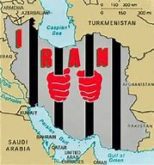
 Shabtabnews In this dark night, I have lost my way – Arise from a corner, oh you the star of guidance.
Iranwire – “It’s not that we were healthy people with normal lives before this, but we can’t even go back to that wretchedness from before. Faces are all stunned; the city is dead. Every morning you wake up under the rubble, stare at a point in the air, and think how foolish it is that you have to go to work so you’re not late, or study so you don’t fail your exam. What ridiculous and hollow concerns…”
These lines were the last post shared by Shakila Ghasemi, a 26-year-old Baha’i citizen, before her arrest. She was detained more than three weeks ago at her home in the city of Kerman. Since then, her family has been living in uncertainty and deep anxiety about her condition. Her arrest comes amid sustained pressure on Baha’i citizens in Iran, which in recent years has extended across education, employment, and social life.
The Baha’i Faith is the largest non-Muslim religious minority in Iran, yet it is not officially recognized by the constitution. Since the 1979 Revolution, Baha’is have faced systematic persecution, including exclusion from higher education and government employment. The state frequently portrays the Baha’i Faith as a “deviant sect” or as a political front for espionage.
Who Is Shakila Ghasemi?
Shaghayegh Ghasemi, Shakila’s twin sister, describes her as energetic, talented, and determined, someone who consistently tried to turn imposed limitations into opportunities for personal growth. She says Shakila was prevented from continuing her university education because of her religious beliefs, but this did not halt her progress. Using her own savings, Shakila enrolled in art and professional courses to pursue her education independently. According to the family, these efforts were part of her broader goal of building an independent and sustainable future.
According to her sister, Shakila was fluent in English and Turkish and had been learning German before her arrest. She worked as a graphic designer and also held a position at a medical clinic. According to her family, colleagues remember her for her professional discipline, precision, and cooperative spirit.
Shaghayegh Ghasemi also recalls her sister’s personality: “Shakila is social, passionate, and full of life. Her presence energizes a group, which is why she has so many friends.” She says they lived together in Turkey for about a year, during which Shakila built a wide circle of friends. Since her arrest, those friends in Turkey have continued to show their support by sharing messages and images on social media. Despite this, Shakila deeply loved Iran and returned to Kerman after a year in Turkey because she missed her country.
How Shakila Ghasemi Was Arrested
Shaghayegh Ghasemi, describing the manner of her sister’s arrest, said: “At 12:00 p.m. on Monday, January 23, twelve agents appeared at our home. Before entering, they told my mother through the building’s intercom to open the door, threatening that they would otherwise break it down. My mother repeatedly asked to see a judicial warrant, but the agents presented none and only replied, ‘We are the warrant ourselves.’”
According to her, the agents began searching the house immediately upon entry. The mother asked what they were looking for, to which they replied: “We are looking for weapons.” She responded: “We have no weapons and don’t even know what a weapon looks like.”
Shaghayegh Ghasemi added that two female agents subjected Shakila to a body search and seated her in front of a camera. According to her, the agents asked Shakila to wear a headscarf (hijab), but she refused, saying: “This is my home and my private space. You entered my house without a warrant, and now you want me to act according to your wishes and wear a headscarf?”
According to Shakila’s sister, one of the agents addressed her in a threatening tone: “Everyone is afraid of us; aren’t you afraid? Not cooperating will cause trouble for you.” Shakila responded: “I have done nothing to be afraid of. Show me the legal warrant, and I will cooperate with you.”
According to Shaghayegh Ghasemi, after about four hours in the home, the agents seized electronic devices belonging to Shakila and other family members and left the premises, taking Shakila with them in handcuffs.
The Family’s Lack of Information About Her Detention
Shakila Ghasemi’s parents have gone to multiple judicial and security institutions in Kerman searching for their daughter, but so far they have received no clear information about the charges against her, where she is being held, or which agency arrested her. The absence of access to a lawyer has only deepened the uncertainty surrounding her case.
Two to three days after her arrest, Shakila made a brief phone call asking her family to deliver her laptop charger. However, when the family attempted to deliver it, they were told that no person by that name was in custody, and the charger was refused. One day before February 11 (22 Bahman), Shakila made another call lasting about 30 seconds. Her voice lacked its usual energy as she told her family: “I am fine, don’t worry.”
A few days later, the Ghasemi family was informed that Shakila had been arrested by the Intelligence Organization of the Islamic Revolutionary Guard Corps (IRGC) in Kerman.
The IRGC Intelligence Organization operates separately from the Ministry of Intelligence and is known for its more ideological and severe approach. Individuals detained by the IRGC are often held in “parallel prisons” or secret wards, where judicial oversight is limited.
Shakila’s family is deeply concerned about her physical and mental health and fears she may be under pressure to give forced and false confessions.
Forced confessions are a cornerstone of Iran’s security system. Detainees are often held in solitary confinement and subjected to psychological or physical pressure until they agree to read scripted confessions on camera, admitting to charges such as “espionage,” “organizing riots,” or “heresy,” which are then broadcast on state television.
Broader Concerns About the Situation of Baha’is
In recent days, the international Baha’i community has issued a statement warning of growing pressure on Baha’is in Iran. It noted that during periods of social crisis, pressure on religious minorities often intensifies, with state media attempting to portray Baha’is as the source of societal problems.
The statement also pointed to an increase in arrests across various cities, the broadcasting of forced confessions, and the leveling of baseless charges against Baha’is. It specifically mentioned a program aired on Channel 2 of state television that promoted narratives hostile to the Baha’i community.
Human rights activists have repeatedly warned that arrests without transparent communication about charges, lack of prompt access to legal counsel, and pressure to extract confessions raise serious concerns about detainees’ safety and well-being.
For now, Shakila Ghasemi’s family remains in limbo, waiting for reliable information about their daughter’s condition. They hope she will be given access to a lawyer, allowed regular contact with her family, and that her case will be handled transparently. The family says their only wish is to know where she is being held and whether she is safe.