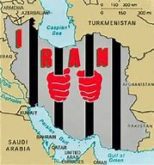
 Shabtabnews In this dark night, I have lost my way – Arise from a corner, oh you the star of guidance.
Iranwire – Ali-Akbar Mousavi Khoeini, a former reformist MP from Tehran, academic researcher, and political activist who recently returned to Iran after 17 years, says the idea of electoral reform has run its course in Iran and that the country must move beyond the current structure of the Islamic Republic.
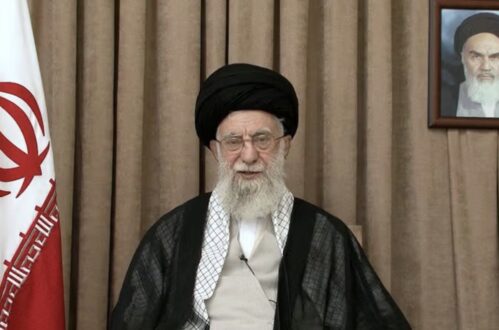
Calling himself a “transition-seeking” political activist, he holds Supreme Leader Ali Khamenei directly responsible for the killing of protesters and argues that the UN’s Responsibility to Protect (R2P) doctrine should be invoked to hold him and those involved accountable.
We spoke with him about what he witnessed in Iran, the events of the recent protests, and the future of the country.
The Interview
You recently traveled to Iran after 17 years and returned to the United States about ten days before the 12-day war. What changes did you see among the younger generation, thousands of whom were killed by the Islamic Republic in last month’s protests?
I saw Iran pregnant with a child named “Freedom.” I never thought that such a will and readiness for major change existed across every spectrum, movement, age group, and geographical area.
I was able to spend time visiting various villages and cities – places where I was born or had worked and held memories of – stretching from the west and east to the north, Tehran, and Qom. I observed several major changes; some were very hopeful, while others were concerning.
The first major change was that the new generation of youth is completely different from the youth I saw during or before the Reform era in civil society, such as in the Advar-e Tahkim-e Vahdat (Alumni Association). Today’s youth are braver and more aware than previous generations. When I spoke with them, I felt how eager they were to know what help and possibilities for change exist from the outside world. They were keen to study and wanted to know more about other countries so they could achieve change quickly and with the least possible cost.
The second point, which was concerning for me, was that when these same young people realized I had come from America, 99 percent of them asked how they could leave the country and how I could help them escape this situation and emigrate from Iran.
Another point was urban development. To be honest, I did not expect private buildings, shops, and so on to be so developed. I was very surprised; it was as if I had entered a “New Iran.” I hope these major changes are not accompanied by a large-scale international war that leads to the destruction of infrastructure. I hope change happens at the hands of the people themselves, with the support of the international community.
The last change, which was negative and frankly shocking to me, was the surprising growth within the revolutionary and Shia fundamentalist population. A younger generation has grown up there, coming from various families where we did not previously see revolutionary forces. It is as if the ideology has permeated these families. They were even surprised by my surprise. Some friends told me that during the years I was away, resources and opportunities were used by that movement to fill the gap and cultivate these individuals. Some of these people have developed a specific ideological dependence on fundamentalists, while a large portion is tied to them through interests, positions, and systemic corruption (rents). In short, that “revolutionary” establishment has become very “fat,” which will make the transition period and the post-transition era more difficult.
In summary, although this trip was met with some unkindness and misunderstandings outside of Iran, it was worth it. I told myself I wish the opportunity to travel had been provided sooner and that I could have made this trip years ago.
How did it even happen that you went to Iran? I believe you decided to go after meeting Mr. Pezeshkian in New York. Were there consultations during that meeting? What was the story?
First of all, my desire to officially check with the government regarding whether there were any issues with me visiting my homeland dates back to the Rouhani era. During the JCPOA period, when we thought Iran wanted to enter the international arena and that development and de-escalation were going to happen, a “Travel Query” section was created on a Ministry of Foreign Affairs website called Mikhak. They publicly announced that anyone wishing to return could have their status checked across all security, military, and judicial institutions. They even said they could check for those with tax issues or pending complaints. To be honest, I registered on the website back then and received a verbal negative response.
Officials from Mr. Rouhani’s team who had come to attend the UN meeting explicitly warned me not to come; they specifically stated that the IRGC would arrest me at the airport and that the government could do nothing about it. However, in this new phase, since Mr. Pezeshkian took office, I was invited to and attended a meeting in New York, following the same programs of inviting expatriates by governments associated with the Reformists.
There, I asked Mr. Pezeshkian, “When can we finally come and visit our country, Iran?” I told him, “Mr. Pezeshkian, these matters are not entirely in your hands; they require inquiries from the IRGC, judicial bodies, and so on. Even the Ministry of Intelligence is not fully under your control.” I noted that it needed to be checked because my previous travel queries had come back negative. He said, “Well, you can apply again, and it will be processed,” which I did through the Mikhak website and the Travel Query icon.
I know many others in Europe, the US, and Canada also applied for inquiries and received positive responses under the new government. Some have gone and returned – though perhaps not like me, because while I was in Iran, I decided to participate in an academic panel related to my field of technology. It was during the announcement of the new “Peace and Conflict Resolution” major – the first time in Iran – which I had supported. My trip to Iran gained widespread coverage because of that.
How did you trust the response to this inquiry? Isn’t trusting such a response a risk in itself?
Yes, from my perspective, it carried at least a 25 percent risk, while my friends and family thought I was taking a 40 to 50 percent risk. Of course, I had a degree of relative trust in Mr. Pezeshkian’s government, having applied through their website, based on the era of Reform when he was Khatami’s Minister of Health. The response to the inquiry was double-checked.
Beyond that, the truth is that the late Ebrahim Nabavi, who ended his own life here in Maryland, had a very negative impact on my morale. He was among those who had wanted to return to Iran for twenty years at various points but could not, and he had shared this issue with me. This affected me deeply. I even went to pre-purchase a grave for my future. Since graves are expensive in Maryland, I wanted to pre-purchase one in a place where Iranians and Muslims are buried.
I was sliding into a state of depression, thinking that if I could not go to Iran, I might remain in exile forever or that a similar fate might await me. In short, I was very upset by this situation. In that state, when I checked the inquiry again after the Nabavi incident – even though my family was worried and largely opposed my going – I took the risk after consulting with friends.
Did any problems arise while you were in Iran?
At the airports during arrival and departure, no. However, in the middle of my stay in Tehran – before I had traveled to other cities – I was in a coffee shop meeting with academic colleagues and friends from my days of transformation-seeking activism. Suddenly, the Ministry of Intelligence called my brother, as I did not have a local phone. My brother brought the phone to me and said the Ministry of Intelligence wanted to speak with me.
I had already consulted with a lawyer experienced in dual-citizenship issues. On the phone, I said my lawyer could come because I had the inquiry document stating I had no issues. They said, “Yes, that paper is valid, and you have no problems, but we need to talk to you.” I insisted that I could not come until the final day of my trip, after returning from the provinces, because I knew it would be a challenge and might ruin the sweetness of the trip. They agreed, and two individuals met with me at an official Ministry of Intelligence building.