 Shabtabnews In this dark night, I have lost my way – Arise from a corner, oh you the star of guidance.

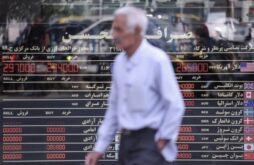
iranwire – A bullet fired at unarmed civilians protesting in the streets takes a fraction of a second to cut a life short or maim a body. Yet pulling the trigger free from moral guilt and responsibility takes years or decades of systematic indoctrination, dehumanisation, and ideological warfare. This article aims to deconstruct the cold-blooded massacre of Iranians protesting against decades of Islamic rule, perpetrated by the IRGC, Basij, counterinsurgency forces, and foreign Islamist militia groups in the streets of over 400 cities and towns in Iran, particularly on January 8 and 9. The exact number of casualties is still undetermined due to censorship and propaganda campaigns intensified by the complete internet and telecom blackout for days on end. However, the latest estimates, according to an Iran International editorial, based on hospital and leaked government reports as well as eyewitness accounts and emerging phone footage, indicate a shocking and unimaginable number of at least 36,500 deaths. Although the protests initially broke out in Tehran’s Grand Bazaar, led by merchants protesting the plunging currency value and dire economic prospects, they quickly swept across the country like a raging blaze. The discontent with the conditions of life in Iran is far deeper than it can be reduced to economic demands or women’s rights alone. The struggle is triggered and thematised in each episode by an incident (e.g., the Green Movement in 2009; the Woman, Life, Freedom movement following the death of Mahsa Amini in 2022), yet remains in essence civilisational and of historic significance.
Massacres always begin as dehumanising falsehood discourses before they are actually carried out. The violent antisemitic discourse led to the Holocaust; the uncompromising anti-capitalist and Stalinist discourse led to the Gulag in Soviet times; the self-righteous jihadist discourse has encouraged countless terrorist attacks on civilians in recent years. It is not only the brainwashed executioners who blindly perform the massacre in the theatre of death, but also the intellectual machinery that supports, justifies, and sets the scene for the final act. Massacres rear their disturbing and often disguised heads in words and images (i.e., Hitler’s Mein Kampf (1925); Riefenstahl’s Triumph of the Will (1935); Lenin’s The State and Revolution (1917); Navvab Safavi’s The Society of the Devotees of Islam (1940–50); Khomeini’s Islamic Government (1970) and the notion of Velayat-e Faqih, or Guardianship of the Islamic Jurist) before a single bullet is fired. The massacre of freedom-seeking Iranians in recent weeks is no exception.
Apart from the direct influence of demigod leaders elevated to an absolute level of public worship, an elite group of intellectuals—including academics, writers, and artists—often reinforce and reproduce massacre discourse through words and images. In the case of Iran, writers, poets, and academics since 1953 have been forcefully engaged in a campaign motivated by Shia Islamist and leftist communist ideologies, paving the way for the rule of the Velayat-e Faqih in 1979.
Figures such as Jalal Al-Ahmed, author of Gharbzadegi (Westoxification or West-struck-ness) in 1962—who was inspired by philosopher and academic Ahmad Fardid, who coined the term Gharbzadegi—along with Ali Shariati, who laid down the socio-theocratic principles of the Islamic Revolution in the 1970s, played a major role in rallying the masses behind Khomeini and his forthcoming Islamic rule. The absolutism of this discourse, with its theopolitical ideological core, imbued every aspect of revolutionary governance and its hard-power arms, most notably the IRGC. Anybody who questioned or protested against Islamist morality and lifestyle was forthwith branded a betrayer, foreign agent, degenerate, or Mohareb (enemy of God). The discourse soon turned into a state apparatus of violence to repress, incarcerate, torture, and murder, among other heinous crimes sanctioned by the radical core of the Islamic regime.
A totalitarian regime of crime was born. The principal ideology of the newfound order was propagated and justified, directly and indirectly, in films, books, interviews, press articles, statements, and open letters by a host of intellectuals under the banner of gradualism, religious nationalism, anti-Israel leftism, Westoxification, and similar frameworks. A few days before the full-scale killing unleashed on unarmed civilians across Iran, Farrokh Negahdar, an Iranian leftist political activist, claimed on a BBC Farsi debate panel—without providing any evidence—that protesters had been trampled and killed in stampedes rather than by security forces’ gunfire. Following the protests, former president Mohammad Khatami referred to the anti-regime demonstrations as a grand conspiracy hatched by Israel and the United States, astroturfed to destabilise Iran’s territorial integrity.
Later, on January 18, fourteen exiled Iranian intellectuals and activists, including Hamid Dabashi and Abdolkarim Soroush, published a statement on the mass killing of protesters asserting that while they condemned the killings, there were reports—for which no evidence has been produced to date—that Israeli elements and criminal groups had violently interfered in the protests. Another group of political activists, such as Parastou Forouhar in a BBC Farsi interview and Ahmad Zeidabadi in a video recording disseminated online and published by BBC Farsi, condemned the killings but pinned the blame on Crown Prince Reza Pahlavi, who had called on people to chant slogans from inside their homes or in the streets on January 8 and 9. Such politically motivated narratives are an effort to divert attention away from the ruthless “war”—not a misnomer, as some have argued—the regime waged against rightful and peaceful protesters. There is no other word than war that can adequately describe a systematic and rehearsed massacre, including indiscriminately gunning down civilians, mass killing detainees, kidnapping the wounded from hospitals, and delivering a coup de grâce to them, to name but a few.
The act of killing occurs in the mind before the guns fire. Ideologies and absolute allegiance to a political order can whitewash and explain away crimes without qualms, as observed in the silence and indifference of left-wing politics and activism toward the suffering and revolution of Iranians. They can intellectually load the guns and pull the trigger before the gunmen enter the scene. That is why, once the crime is committed, it appears as a repeat performance, as if nothing worthy of attention has taken place. The actual criminals emerge blameless and justified, as they are presented as part of a crime scene in which their crime is merely one in a succession of shared crimes. One crime is glossed over by another, by the blind force of “correcting” or revolting against history, and by the degree to which the crime narrative fits one’s unequivocal support or hatred for an idea, person, or group of people (Roger Waters, the rock musician and political activist, associating the Iranian revolution with Israel, the Mossad, and the United States on Piers Morgan Uncensored, is one such example—though he later attempted to explain his remarks).
Iranians will reclaim their freedom and their country with or without international support, including the promised US strikes. This is a Berlin Wall moment, as some have put it. More crucially, however, it resembles a 1945 moment, recalling the defeat of Imperial Japan, when a fierce US enemy reached a turning point and was set on a path of détente and eventual amity. A free Iran, disentangled from the axis of evil, will change the region—no doubt. But more importantly, it will serve as an ally of the West in the fight against terrorism and the looming threats posed by China. This is a moment of historic and moral choice.
Soheil Ashrafi, PhD, is an academic and researcher. He is the director of communications & media at the University of Central Asia. The views expressed in the article are his own and do not reflect the views of the institution he works for.