 Shabtabnews In this dark night, I have lost my way – Arise from a corner, oh you the star of guidance.
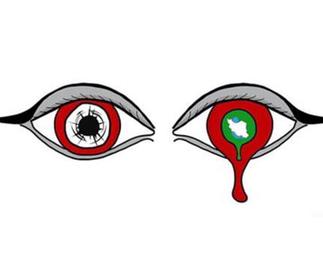
Iranwire – Multiple health-care sources in Tehran, Shiraz, Najafabad, and Nishapur have independently confirmed that during two nights of widespread protests in Tehran – January 8 and 9, 2026 – security forces of the Islamic Republic fired live military ammunition directly at demonstrators’ heads and necks.
“I saw killing here. I saw bloodshed here,” one insider told IranWire when limited internet access briefly returned on Saturday, January 10, referring to the violent suppression of protesters on both Thursday and Friday nights.
According to IranWire’s sources inside Iran, the number of wounded and killed is so high that medical workers say, “we have never seen anything like this before.”
This report is based on interviews with five medical workers in Tehran, one activist, and several eyewitnesses across Iran. IranWire has also received photos and videos documenting the events, in addition to first-hand testimony.
Security Forces Fired Live Military Rounds at Civilians
Medical sources told IranWire that on both nights, security forces “shot protesters in the head and neck with live ammunition.” They added that the total number of wounded and killed far exceeds official estimates.
In the Ghaleh-Hasan-Khan neighborhood, one of the main protest hubs, eyewitnesses said that after crowds gathered on Friday night, people blocked streets, set fire to a branch of Bank Ayandeh, and attempted to take over a Basij militia base. It was at that point that live fire erupted.
A witness said, “Teenagers were hit on the streets. They shot from above buildings.”
In one horrific incident, six protesters were reportedly killed and brought to a surgeon, all having been struck in the head by live rounds. “I removed the bullets myself. None survived,” the doctor said.

Evidence of Mass Eye Injuries
According to medical workers cited by IranWire, before the internet was cut off, at least 500 people with serious eye injuries sought treatment at hospitals in Tehran, including Labbafinejad, Farabi, and Mahab-Kousar hospitals. They warned that the true number of people who may have lost their eyesight could be far higher, particularly given the intensity of the crackdown on both nights.
Reports from Other Cities Across Iran
Rasht – January 9
Photos and videos received by IranWire from Hashemi Square in Rasht show security forces using live military weapons against protesters. The footage shows wounded demonstrators, including people struck by ammunition that caused serious injuries.

The next image shows the body of one of the protesters who was killed in the same area.

These two received images show that the side of one protester in Rasht sustained severe injuries as a result of being shot with a military weapon. Due to the graphic nature of the wound, the image has been blurred. Unblurred versions of all images and videos are retained with IranWire.

Shiraz – January 9
In Shiraz, hospital staff confirmed that a woman was shot directly in the head with live ammunition during the protests. In graphic but blurred footage shared with IranWire, a young man is seen lying on a hospital bed with multiple chest and facial wounds. Medical sources said many patients there were hit by both buckshot and military rounds.

Najafabad & Yazdanshahr (Isfahan Province)
IranWire’s health-care sources said that smaller towns such as Najafabad and nearby Yazdanshahr faced even harsher repression than larger cities. On January 8, security forces opened fire with various weapons on protesters near the governor’s office, killing several people.
Local medical staff said families retrieved bodies themselves, buried their children in makeshift graves without formal rites, and declared them martyrs. “The level of violence by security forces was extremely high,” one doctor said.

Nishapur – January 9
A physician in Nishapur said that at least 30 people were killed during Friday night’s protests. He told IranWire that Iranian security forces fired live rifles from rooftops and balconies, targeting protesters and even bystanders. Among those killed were very young children, including a five-year-old who was shot while in his mother’s arms.
Doctors are treating wounded protesters in private clinics out of fear of arrest, with internet shutdowns making communication extremely difficult. One physician asked, “How many more have to die before the world helps us?”
Karaj – Critical Medical Shortages
In Karaj, including the suburb of Fardis, medical workers say hundreds of protesters were wounded over the two nights. Activist channels report that hospitals – including Kasra, Takht-e-Jamshid, and Ghasem Soleimani Hospital – are overwhelmed and facing severe shortages of doctors, blood, and painkillers such as morphine.
Operating rooms are stretched beyond capacity, with many injured people left waiting in agony for treatment. Some victims have lost limbs or suffered shattered bones after being hit by live ammunition.
Limited View of a Growing Crisis
With internet access in Iran still heavily restricted, the full scale of the crackdown remains unclear. However, based on testimony, medical records, photos, and videos reviewed by IranWire, it appears that security forces used live military ammunition against civilian protesters, leading to mass casualties, widespread eye injuries, and numerous deaths – far exceeding what has been publicly reported.