 Shabtabnews In this dark night, I have lost my way – Arise from a corner, oh you the star of guidance.
iranwire – American warships cut through Caribbean waters. Venezuelan airspace is closed by an order from Washington. In the White House, officials draft scenarios for the day after Nicolás Maduro falls.
Twelve thousand kilometers away in Tehran, the Islamic Republic is making a different calculation: now is the time to draw closer.
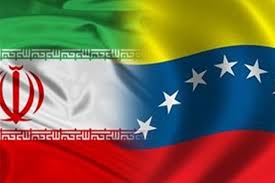
The relationship between Iran and Venezuela – two oil-rich nations bound by shared antagonism toward Washington – has evolved from a pragmatic partnership into what Tehran now calls membership in an “axis of resistance.”
With Venezuela facing perhaps its most precarious moment since Maduro took power, Iran’s continued support reveals both the depth of ties forged through decades of mutual isolation and the limits of American pressure campaigns.
“Venezuela is a true friend and ally of the Islamic Republic,” Iranian President Masoud Pezeshkian told Maduro in a December 9 phone call, according to official statements. “Iran supports this country under any circumstances.”
The timing of that call was deliberate. Days earlier, the U.S. had moved to close Venezuelan airspace, escalating a confrontation that has fueled speculation about potential military conflict, a coup attempt, or Maduro’s flight from the country.
Washington has deployed naval vessels to the Caribbean, imposed severe sanctions, and accused Maduro of running a narco-state rather than a legitimate government.
Venezuela rejects the charges as fabricated pretexts for regime change. Iran, which has spent more than four decades navigating U.S. sanctions and pressure, has emerged as Caracas’ most vocal defender on the world stage.
The foundation for Iran–Venezuela ties was laid not in Tehran but in Caracas, when Hugo Chávez nationalized the oil industry in 1999 and expelled American companies.
The move directly challenged U.S. interests in Latin America and transformed Venezuela into an outspoken critic of Washington’s regional influence.
Iran took notice. During the presidency of Mahmoud Ahmadinejad, Tehran began cultivating closer relations with Chávez’s government, seeing in Venezuela a kindred spirit resisting American hegemony.
The relationship deepened under Maduro, who succeeded Chávez in 2013.
Today, Iranian officials openly describe Venezuela as part of the “axis of resistance” – a loose coalition of states and proxy militant groups that oppose U.S. and Israeli influence across the Middle East and beyond.
“The 21st century is the century of resistance,” Maduro said during a visit to Tehran, according to Iranian state media. “All of us who fight colonialism and struggle to decolonize minds and people are part of the axis of resistance against imperial methods for imposing hegemony in the world.”
The framing reflects more than rhetorical solidarity. Both governments view their confrontation with Washington through an ideological lens that transcends geography, casting themselves as defenders of sovereignty against a U.S.-led international order they see as fundamentally unjust.
Iran’s support for Venezuela now permeates official discourse across Tehran’s power structure, from parliamentary speeches to Friday prayer sermons and military briefings.
Mojtaba Zarei, a member of Iran’s parliament, opened a December 3 speech with praise for “the brave nations of Lebanon, Yemen, Iraq, Gaza, and Venezuela who stand against the system of domination and the coalition of freedom and death smugglers, namely Trump and Netanyahu.”
In this telling, Caracas faces the same forces arrayed against Iranian allies in the Middle East.
“Americans make countries like Syria, Libya, and Sudan stateless to take their resources,” said Mohammadreza Naqdi, an adviser to Iran’s Revolutionary Guard commander. “They take Nigeria’s oil. They pressure Venezuela for oil.”
Friday prayer leaders have echoed the theme.
“If one day only Iran was under their pressure, today we see other countries that want to move toward independence, like Venezuela, have also been caught by them,” Mohammadreza Modarresi, the Friday prayer leader in Yazd, told worshippers recently.
The messaging serves domestic purposes as well, allowing Iranian officials to frame their own isolation as part of a global struggle rather than the result of specific policies.
Iran’s support for Venezuela extends beyond rhetoric. Foreign Minister Abbas Araghchi has held multiple conversations with Venezuelan counterparts in recent weeks, denouncing U.S. actions in the Caribbean as violations of international law and the U.N. Charter.
Araghchi has also warned about Israeli activity in Latin America, describing it as a serious threat to regional stability – a message that links Iran’s two primary enemies in Venezuelan affairs.
Foreign Ministry spokesman Esmaeil Baghaei has been equally forceful, calling the U.S. decision to close Venezuelan airspace unjustified and defending “the inherent right of governments to defend themselves.”
He characterized developments in the Western Hemisphere as “international bullying” that could establish dangerous precedents for lawbreaking in the global system.
Baghaei rejected Washington’s stated rationale – combating drug trafficking – as a cover for political pressure.
He added that human rights organizations have described U.S. use of force against Venezuelan fishing boats as extrajudicial killings.
Venezuela has welcomed the support. Foreign Minister Iván Gil Pinto said relations between the two countries rest on mutual respect and enable them to pursue a “multipolar world” together.
He thanked Iran for its “categorical condemnation” of U.S. airspace restrictions, calling it evidence of “lasting solidarity.”
Trade between Iran and Venezuela approaches $4 billion annually, according to Iranian officials, significant for two economies battered by sanctions.
Oil provides the foundation. Both nations depend heavily on petroleum revenues, and both face restrictions on selling crude in international markets. This shared predicament has fostered cooperation that helps each evade sanctions.
Venezuela has paid for Iranian goods with gold and offered agricultural land for Iranian use.
The countries have also developed security and defense ties, including the reported production of Iranian Mohajer and Shahed-131 drones in Venezuela, though details of military cooperation remain murky.
Whether Iran has provided weapons in recent months is unclear. In November, Maduro reportedly sent urgent letters to Moscow, Beijing, and Tehran requesting help strengthening Venezuela’s military capabilities against what he called America’s “imminent aggression.”
Iranian officials have not confirmed any response.
Hojjatollah Soltani, Iran’s former ambassador to Venezuela, described the relationship as “close, friendly, and arising from common resistance against American pressures,” built on “brotherly, freedom-seeking, and independence-seeking sentiments.”
Soltani said the U.S. used “the dollar, banking system, and political tools” to try to break Venezuela’s independence, even attempting “assassination to create a self-proclaimed government to overthrow Maduro’s government.”
Those efforts failed, he said.
He recalled mutual assistance during crises: “Venezuela helped Iran with petrol during the sanctions years, and Iran also stood by Venezuela by sending tankers during the most difficult period.”
Iranian officials see parallels not only between the two governments but also between their opposition movements, which they criticize in similar terms.
A representative of Iran’s supreme leader in Mazandaran province said in November that the Nobel Peace Prize went to “a lady from Venezuela who asks America to come and militarily attack her own country to overthrow the popular government – the same thing that the MEK, separatists, monarchists, and Baha’is do in Iran.”
He was referring to María Corina Machado, Venezuela’s opposition leader and recent Nobel laureate, who has called for stronger international action against Maduro’s government.
Machado has explicitly criticized Iran’s role in Venezuela.
“We know that the regimes of Iran and Venezuela have close cooperation with each other and have become a real threat to our hemisphere,” she said.
She described her mission as dismantling “the criminal structure that holds power in Venezuela and enjoys the support of dictators such as the Iranian government.”
As the White House drafts plans for a post-Maduro Venezuela, Iran faces questions about how far its support will extend.
The countries’ economic ties, while significant, pale beside Venezuela’s potential relationships with major economies. Iranian military assistance, if it arrives, would likely prove insufficient against American power.
Yet Iran’s backing offers Maduro something valuable: high-profile diplomatic cover at a moment of intense isolation.